Behavioral Health Workgroup

Four in 10 community survey respondents who needed mental health care services did not get them. The most common reported reasons for not getting needed mental health care were that community members were not able to find accessible providers, costs were prohibitive, and respondents didn’t know where to find help. Relatedly, more than 4 in 10 respondents who needed services to address substance use did not get them.

In community member focus groups, mental health was highlighted as a critical component of overall well-being, with the lack of access to mental health resources being a significant concern. Additionally, participants highlighted the need for more accessible and affordable mental health services, including counseling, therapy, and support groups; stigma surrounding mental health issues that prevent people from seeking help, especially in certain communities and professions like the military; and the complexities of navigating the mental health services system.

Community partners emphasized the need for accessible and culturally competent mental health services. Partner input focused on providing more accessible and culturally competent mental health services, especially for populations that have been underserved, such as LGBTQIA+ youth, postpartum women, and trauma-affected adolescents. They also noted that provider shortages, language, culture, distrust of the medical system, and a need for more education and de-stigmatization around mental health prevent residents from accessing services.

A more detailed summary of the partner conversation on Behavioral Health can be found in the 2025 CHNA.

Key Resources:

Session 1: 

Session 2: 

Session 3: 

Women’s Health Workgroup

Survey respondents indicated that the top reasons for discrimination were age, gender, race or ethnicity. While respondents who needed health care services did not get them, women were more likely to indicate that they did not get all the health care services they needed compared to men. Those identifying as transgender or non-binary were most likely to report not receiving needed health care services.

Community members participating in the focus group cited a lack of sexual health education as a community health concern. They further indicated that inadequate sexual health education leads to gaps in knowledge and stigma, especially for LGBTQIA+ individuals, youth, and seniors. This lack of education leads to gaps in knowledge about basic sexual and reproductive health, as well as stigma around these topics. Focus group participants noted that young people, including those who identify as female, often feel uncomfortable, ashamed, and scared about the changes they are experiencing during puberty due to the lack of education. Community partners highlighted housing insecurity and mental health as top health needs, with a focus on the impact of housing costs, availability, and the specific mental health challenges faced by pregnant women and children.

A more detailed summary of the partner conversation on Women’s Health can be found in the 2025 CHNA.

Key Resources:

Session 1: 

Session 2: 

Session 3: 

Older Adults’ Health Workgroup

Older adult community members were eager to share their responses in the community survey with 33.3% of respondents being 65 years and older. Respondents named caregiver stress as the top health problem in the community and age as the primary reason for discrimination.

Focus group participants expressed concern for older adults, especially those within limited income, who may be isolated or have difficulty accessing the services they need. Community partners expressed concerns for older adult and disabled populations, especially those that are homebound, who were noted as particularly vulnerable. Family caregivers to both these populations struggle in low-income and/or rural settings to source or provide continuity of adequate care.

A more detailed summary of the partner conversation on Older Adults’ Health can be found in the 2025 CHNA.

Key Resources:

Session 1: 

Session 2: 

Session 3: 

September 26, 2024 – Building Bridges: Advancing Supplier Diversity Healthcare Conference

Last Year, we hosted our inaugural 2023 Hospital Supplier Diversity Conference, which was an incredible success! With over 100 attendees, we fostered meaningful connections and shared innovative strategies to advance supplier diversity. Inspirational speakers, engaging panel sessions, and a vibrant marketplace of ideas left everyone energized. We witnessed the power of connection and heard stories of success for diverse businesses in establishing hospital contracts.

Join Us in 2024!

This year, we’re taking it to the next level.

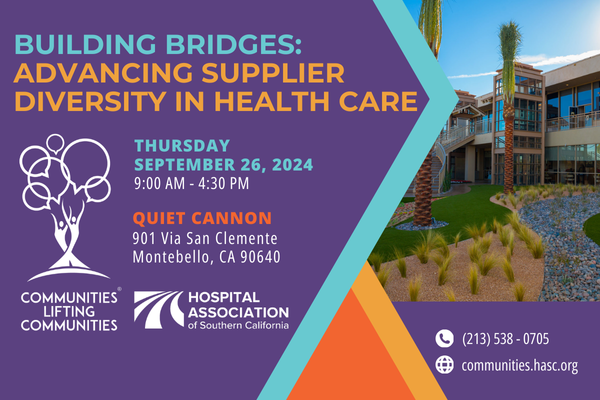
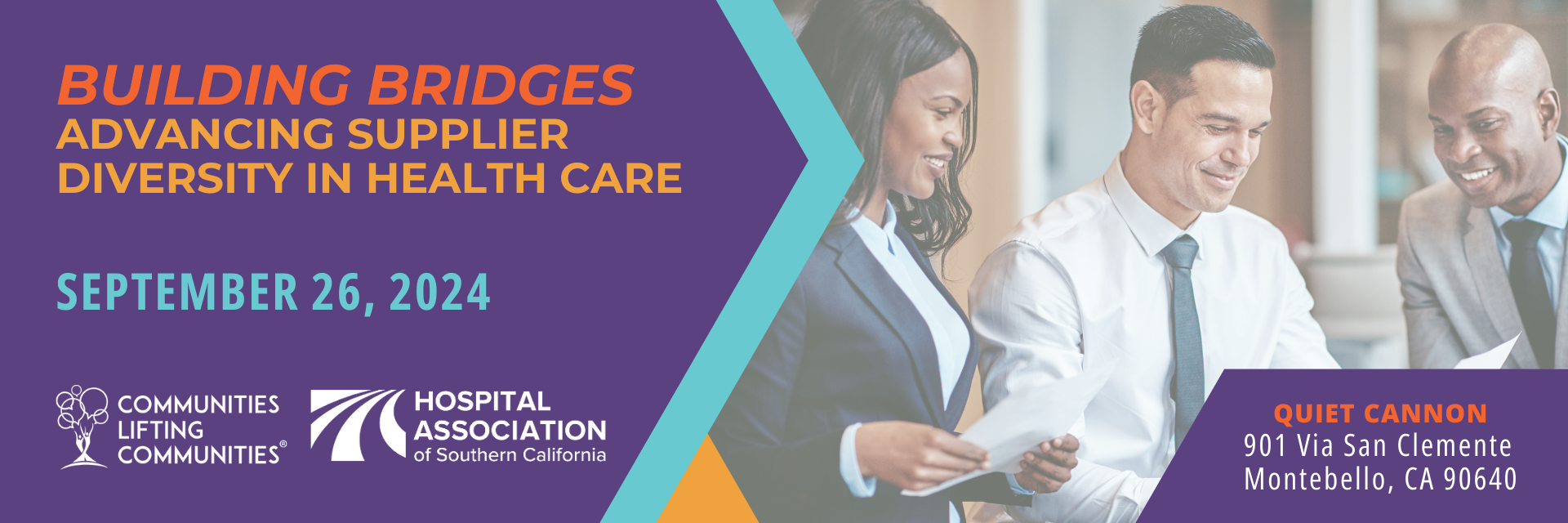
Communities Lifting Communities is thrilled to announce its fall hospital supplier diversity conference, Building Bridges: Advancing Supplier Diversity in Health Care.

September 26, 2024
09:00 am – 4:30 pm

Quiet Cannon
901 Via San Clemente
Montebello, CA 90640

As an advocate for diversity and inclusivity, CLC aims to build bridges among industry, hospital procurement, and supply chain professionals. In this way, diverse suppliers and economic development organizations can come together to explore partnership opportunities, share best practices, and collectively advance diversity inclusion in healthcare procurement.

Be part of a community dedicated to expanding horizons, creating new partnerships, and building bridges that span industries and communities. The 2024 Supplier Diversity Conference is your chance to connect, learn, and grow!

  • Engage in panel discussions with industry experts on topics such as supplier diversity initiatives, overcoming challenges in procurement, and fostering sustainable partnerships.
  • Participate in interactive workshops designed to equip attendees with practical strategies for enhancing supplier diversity within their organizations.
  • Network with peers, potential partners, and industry leaders to exchange ideas, forge connections, and explore opportunities for collaboration and growth.

Whether you’re a supplier, hospital executive, entrepreneur, or diversity advocate, the 2024 Supplier Diversity Conference offers invaluable opportunities.

Register below to secure your place in our conference!